Settling abroad has always been a long-standing dream for millions across the globe. But is life in the developed countries any different? Living away from home in an alien country has its own set of challenges. While one may contemplate moving to another country, and even dream of it, it isn’t always feasible. It often leaves us wondering how life is on the other side.
Tanushree Ghosh, writer, author, activist, has been living in the US for fourteen years now and has recently published a book of short stories based on the life and struggles of immigrants.
So, we got author Tanushree Ghosh to tell us 7 things we’ve always wondered but never knew who to ask.
- Why did you choose to do it and did your reasons work out?
I solicited my sister and her friends to gather what these questions might be. Fully prepared (having underestimated quintessential elder sibling style) to answer questions on food and attire. But I was hit with this bouncer instead and now get to try and explain the inexplicable.
My reasons for seeking a life outside hadn’t started with seeking a life outside. They had started with not wanting the life I could see myself having otherwise (please discount potential blinders and misjudgments of a then 22-year-old on what I had confidently predicted for not just my years to come but also that of my country’s). I didn’t want to have to compromise in the quality of work I would do, worry about not earning enough, and most importantly, had wanted to go away from it all to have ‘freedom’. Interestingly, all of these reasons did work out.
Until I got married and started a job. Freedom can be many things – but to me, it is the ability to do what your heart says and although where you stay matters for that to some extent, who you are and who you are around, does more.
This came out when a friend challenged this expression of mine with the question of ‘freedom of expression’. Say, for example, speaking against Trump or Jesus vs. the equivalents here and possible consequences. I don’t deny that there are additional risk factors that one can be exposed too based on the geo (and that comes into play in my answers later). But when I stop myself from posting freely on my Twitter or Facebook feeds in the fear of that spilling over and being discovered by my LinkedIn contacts, while my friend resigns from his university job here and goes into hiding, but keeps publishing his views – the argument of freedom fostering from external safety nets falls flat on its’ face. Freedom, as I have now realized, is an internal pursuit and quality.
- Is life better or just different?
Depends on who you are and what life means to you. For example, to me, life means something very different than what it does to my sister. Paranthas and teas will keep her happy even if her house floods (in fact, that might be one of her dream scenarios). To me (given my short fuse), infrastructure, convenience, and efficiency are prime. I don’t politely move to the side when pushed out of the queue. I mumble about it for the entire week. My self-improvement goals mastered through mindfulness, go down the drain and I start acting more Arnab Goswami than Dalai Lama. The same happens when potential concerns or constraints halt my plans. You see, flexibility has never been my strong suit, nor forgiveness. So for me, in spite of the pangs of loneliness and bowls of Maggie, life is better where daily life is smoother, business runs faster, and safety is more given and is, therefore, better there. For my sister, it’d just be different – set of pros and cons switching and shifting based on the time and place.
- Do you have to work more or less?
The ‘we hear you don’t have maids there’ question. When I had first moved out, starting Graduate school in Cornell, not only had I ended up in a country where ‘service’ is more often than not ‘self-service’ (it could possibly seem on the face that this a question of affordability – it is to some extent – but it is also a question of attitude there in the US), I had also ended up in a place of not in my wildest dreams I thought I’d be doing this chores. Example: Digging a car out of feet high snow multiple times a week with my ‘oh my dear darling Bengali child’ upper body strength. Washing undergarments (in Grad school, laundry was not in-house) stopped seeming hard after the first week of hauling groceries uphill. Worse yet, these kind of life experiences weren’t unique for me unfortunately and therefore didn’t elevate my ‘look what I can do’ status (except for with my grandmother – from whom I would have had this kind of sponsorship just from vegging on a couch all day – no need for snow shoveling).
However, in adult life (real adult life of parenting, holding a job, and such), I feel that you work more here and less there. I clean my pool, do my own yard work, for the most part, cook, have no babysitting (except for friends who – bless their hearts – might be parenting my daughter more than I am). We do have cleaners who come once a month, but of course, there is interim cleaning to be done that I take care of. And of course, there are financial, health, school, and other such matters (handled by my spouse mostly). But… things I feel get done faster there, life is not sucked out of you in traffic, and you don’t spend more time with Ola drivers than you do with even your own self. The officers handling your paperwork doesn’t ask you to come back in a month, and for the most part, the days go as predicted – causing boredom yes, but also a relief.
Many of my friends, both here and in the US disagree on this point, but I will hold my ground that it’s tougher here work and chores wise than there.
- Can you wear shorts always (aka, are there restrictions on what you wear)?
Yes! At last, I am vindicated. The apparel question has come. Yes, for the most part, I can wear whatever I want there, wherever, whenever. No short is too short (yet) for me there. Staying and working in Bangalore, I am convinced that the same is the case here (at least in this city) often – but the point of this question is not lost on me, and I have answered with that in mind.
- How do you feel when you walk on the streets?
This is probably the easiest question to answer and the toughest to explain further in case anyone asks me to do so. For the most part, walking on the streets there (which is minimal btw in Phoenix Arizona – but let’s sub ‘streets’ for ‘in public’ and move along), I feel unnoticed and unjudged. And I love that. That is one thing, if I ever have to, I will have a tough time giving up. Even if I am traded with unlimited, steaming, ginger chai in exchange.
- Are the things we hear about guns and children getting shot, specific to the US, true? How do you feel about this as a mother?
Even though it’s not exactly how it seems from the question above, what is heard about gun violence in the US and the danger of getting shot there in public places (including in pre-schools and kindergartens even) is true. As a mother, I find this very hard to deal with. As I have written about in an article before, there are drills in schools, lockout procedures, drop off and pick up rules, etc. that I and my now six years old have to follow daily which makes the possibility even more real and there’s nothing that parents can do to help this. I will leave it here to keep this post from becoming a rant on stupidity, NRA, gun money and policy and practice some deep breathing instead.
- Don’t you miss family?
Missing loved ones and being near them, missing events, missing the sounds and sights – from the bickering to the laughter – is the toughest thing about the choice I made for me. There is no wit or smart answer to state this any differently than as just a simple sentence. Nor is there any ‘but’ that can be added to make this a pro vs. con statement. The only thing that can be added is that not only do I miss family, but I miss myself too – the self that I was when I hadn’t split myself forever into two beings forever.
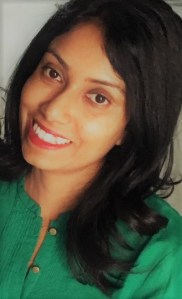 Tanushree Ghosh works at Intel in Supply Chain and has a Doctorate in Chemistry from the Cornell University. She is also a social activist and writer. Her blog posts, op-eds, poems, and stories are an effort to provoke thoughts, especially towards issues concerning women and social justice.
She is a contributor (past and present) to several popular e-zines (incl. The Huffington Post US, The Logical Indian, Youth Ki Awaaz, Tribune India, Women’s Web, Thrive Global and Cafe Dissensus). Her literary resume includes poems and stories featured in national and international magazines (Words Pauses and Noises, UK; TUCK, Glimmer Train Honorable mention) as well as inclusion in seven anthologies such as Defiant Dreams (Oprah 2016 reading list placeholder) and The Best Asian Short Stories 2017 (published out of Singapore by Kitaab). Her first single-author book, From An-Other Land, is on immigration (December 2018, Readomania publishing).
She has held different leadership roles in non-profits (ASHA and AID India) and is the founder and director of Her Rights (www.herrights.website), a 501(3) c non-profit committed to furthering the cause of gender equality. She is often an invited speaker or panelist for both corporate and non-profit endeavors.
Website: www.thoughtsandrights.com, Twitter @thoughtsandrights
Link for the book, From An-Other Land: http://amzn.in/d/drCchZb
*If you wish to write for IWI, head to our submissions page.
 INCREDIBLE WOMEN OF INDIA