As per an NCRB report in 2017, incidents of crime on children involving sexual abuse were a scary 26.2%.
It is common knowledge that child sexual abuse can scar the child for life. The recently released The Apology by Eve Ensler details the trauma a person can be subjected to in the event of such abuse. Written in the first person from the point of view of the perpetrator the book highlights the social, mental, and psychological impact sexual abuse can have on a victim of child sexual abuse.
Hence, the need to protect children from such incidents and be supportive of them in case they are subjected to it.
 Kirthi Jayakumar, social activist, artist, lawyer and writer shares with us what to do in order to if a case of child sexual abuse comes to light, and what measures can be implemented to help prevent such an incident in the first place.
Trigger warning: Mentions of abuse, violence, and trauma
“The Apology” tugs at your heart right from the word go. And if you have experiences that you share in one way or another with the author, it hits home hard. She begins her book with a powerful dedication: “For every woman still waiting for an apology.” What Eve presents in her book roundly sums up much of what many survivors go through, look for, and perhaps frame their healing journeys with. Abuse at the hands of a stranger or a known person leaves a lasting impact in its wake. Oftentimes taking place covertly or under enforced silence, survivors often speak out many years later, the process of gathering evidence is challenging, and prosecution isn’t always a preferred destination. Consequently, many abusers walk scot-free – perhaps repeating their crime against other bodies, perhaps not – but often, never held accountable for what they’ve done.

The Apology by Eve Ensler
A survivor is left to their own defenses, perhaps for many years, all their lives, or even for a short time. Healing is neither unique nor straitjacketed into a formula. We can’t foist our expectations of healing journeys on a survivor, either, because it is disrespectful of their agency, their freedom of choice and decision making, and their right to decide for themselves. Eve asks and explores this question, examining how a survivor can engage with and strive to find psychic liberation from her abuser – especially and in her case after he has died – and, when the abuser has not been held to account for their actions.
Facilitating healing journeys
It isn’t an easy question to answer, and there isn’t a singular response alone – the question is as variegated as the experiences that lead up to it. But, the role of a bystander, a caregiver, a friend, and an outsider to the abuse remains important. And it remains largely constant in terms of what is expected, regardless of the healing journey a survivor chooses to take: that of support, that of empathy, compassion, and respect for agency. What a survivor goes through does not reduce their power over their minds and bodies, and does not reduce their personal agency and freedom of self-determination. This is equally true in the event that a survivor is a child. We often assume that a child knows lesser or that the child isn’t best disposed to decide for themselves, but the truth is that agency starts from young and grows with support and nurture, and not when the clock strikes twelve and the child turns eighteen.
This article is an attempt to share a few best practices one can follow to support a child survivor.
If a child has faced abuse, here are some things to respond:
* Listen to the child. It takes courage to speak up, so listen without judgment.
* If you must ask questions, be sensitive about it and don’t make the child feel cornered.
* Reassure the child that they are not at fault or responsible.
* Don’t hug or kiss the child unless you ask her if he/she feels comfortable – you don’t want the child feeling uncomfortable, again.
* Gently find out all the facts and then try to ascertain what happened.
* Ensure that you tell the child that he/she is safe and that the person who did this to the child will NOT come in contact with the child. Take steps to ensure that this is done.
* Provide the child with professional help and counselling, based on the degree of trauma.
* If you are up to it, confront this person and press charges if you will. If you have your family’s support do so. BUT, be mindful of your child’s comfort, for legal systems may expect the child to speak up and present evidence repetitively, which may be traumatic.
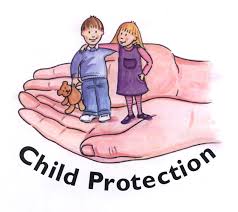
Preventive Measures to Protect Children as Parents
Education is one of the major elements that would help to lessen the extent of perpetration of the offense. Sex education in schools and guidance education at schools would guide children in the right direction, to be wary, and to refrain from going to the other side themselves. Differentiating a safe touch from an unsafe one, knowing what sex is, knowing that it is wrong for a relative to approach you for sex, and knowing that it is wrong to do the same; for starters are useful tips for children. The following information can help:
- Safe touches are those that are experienced as warm, caring and nurturing. They are not hurtful or unsafe ones that come with an ulterior motive.
- Unsafe touches are those that hurt or cause pain, discomfort, unease or any feeling of awkwardness.
- In-between or confusing touches are those that are unfamiliar, those that may seem nice but cause a feeling of discomfort.
- It is wrong for another to touch one’s private parts – the only exceptions are either parent giving the child a bath, or a doctor examining the child in the parents’ or a safe adult’s presence.
- It is wrong for one to touch his own private parts in front of a child, or to force a child to watch as one touches their own private parts. It is wrong for someone to take a child’s picture in the nude. It is wrong for a person to force a child to kiss, touch or to fondle any part of the body of another.
- Every child’s consent matters. No means No. No one can violate that.
As parents, teachers, and caregivers, it is important to remember these things:
- Every child has the right to stay safe. It is not wrong to presume that every child is equally vulnerable, and hence needs to be educated on staying safe.
- Talking to children from very early on, on their safety, and keeping all doors to communication open is vital for their safety and wellbeing.
- Being alert constantly and avoiding any action or decision which is potentially dangerous for the child is vital.
- Drive home the fact in the children that their body is private and nobody, just nobody can touch one’s private parts in any situation. If someone does, they should stop the person and come and tell the parent right away. This conversation has to start as early, maybe at the age of three.
- Teach the child to say no to any person or anything that makes them uncomfortable or sense danger. Tell them, it is ok to say no to anyone at all and most certainly to strangers.
- Tell the child to obey their instincts when she senses something amiss. If they think and feel that the situation is uncomfortable or the person is not doing something right, the child must get away at the earliest.
- Encourage them to be assertive, to be bold and outspoken. If anyone does anything to him/her, which he/ she knows is not right, he/she must say so, first to the person who is doing it, and certainly to the parent. Teach them, especially when they are young to threaten the person with, “I will tell my mother…” This does help to scare off known people many a time.
- Help them identify a person who they trust, someone besides the parent, someone to listen to them if they are hurt, or scared or confused about anything. This is necessary for the times when the parents are not around. If neither of the parents is available, she should report it to any grown-up maybe a neighbour, a teacher, friend’s mother, anyone.
Most significantly, make it known that the child can come and tell the parent anything, anytime. As a parent, one must firmly put across that they would listen to the child no matter what has happened. Nothing compares to the sense of betrayal a child feels if the parents do not believe them.
Be there for your child.
 INCREDIBLE WOMEN OF INDIA