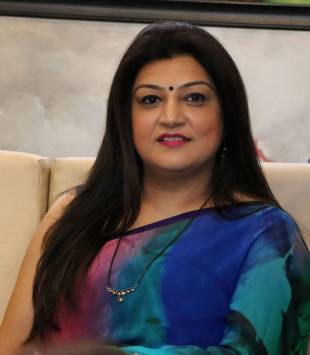
Recently, while talking on women’s equality and what it entailed, I was questioned by an audience member that how could I talk about equality while wearing the mangalsutra. The belligerent lady didn’t stop there but went on to ask what symbol my husband wore to show that he was a married man.
First, it was an incredibly rude comment but we can grant that most people don’t know where to draw the line when it comes to personal space. They will assume they are entitled to their questions just because they can ask it in a loud voice or on the mike.
However, if the question must be answered then the fact is that my dear husband slaves away saving women like her every day, sans even his wedding ring, covered from head to toe in sterilised scrubs for fear of infection and for patient safety. He had stoically told me when we had exchanged vows that the gold band will probably lie in some dusty corner of a bank locker since he could not wear it in the hospital.
Most of us know that a mangalsutra is Sanskrit for a holy or an auspicious thread. It is a necklace or thread that the groom ties around the bride’s neck in India during the wedding ceremony as prescribed in the Manu Smriti. The significance of the mangalsutra was reiterated by Adi Shankara in his book Soundarya Lahari. It is believed that the wearing of this fragile thread enhances the well-being of the wearer’s husband and also denotes the requisite marital status. It becomes a symbol of a happy relationship blessed by the Gods. A thread that ties two lives together for a lifetime.
If you spend a few minutes searching the virtual world for its benefits you will find that there are an equal number of sites that tell you in many different ways that you are but a neck from which the husband’s well-being hangs and it is all that binds you to respect and serve your husband and his family. Similarly, there are articles that will tell you that the black beads absorb negative energy waves and the gold wire being the fire element destroys them.
When it comes to me, however, the choice of wearing the mangalsutra is only mine to make. Marrying into the Sikh faith meant there was no need or compulsion to wear it. I wanted to wear it, not as a protector of my husband and his well-being but simply because I like it. It reminds me that I am his as he is mine. I didn’t think of the checks and balances and still don’t. My family supported it, accepted it, and revelled in it.
Does that make me less liberated as a woman? No.
Unfortunately, the lady thought so. At the event, I only smiled and said, ‘Because I choose to, just as you have a choice to not wear one.’
Isn’t liberation, empowerment and all the other words we use to denote our quest for equality a way to necessitate the ability to make a choice?
But it bothered me, this insistent need for validation, of having people toe the line of what we think is right. Why is it that more and more people today want you to conform to their world view while fighting against conformity themselves?
This question is raised again when any fasting day for husband or kids come up. There is vitriol spread out all over social media about how if you are keeping a fast for your other half you are conditioned and need to break free of these patriarchal shackles. And God forbid if you ask them to ‘live and let live’. Rest assured you will be blasted out of a peaceful existence with the choicest of derogatory remarks.
Valentine’s Day marks a day of celebrating love. But one can find numerous people telling us how silly those people are who post pictures with their loved ones, that love should not be aired, is private, etc.
This is among my pet peeves. If you don’t like it, unfollow, scroll on, remove from friend list…simple. This need to pull others down to feel better about our own lives seems sad. Given that everyone has different ways of expressing their feelings, isn’t it better to step back when we feel we dislike something rather than push at them? Why do we as a society want to air our negative opinion instantaneously?
Isn’t this reverse dominion? What is the difference between a woman being asked to keep the fast and being influenced to do so under social pressure and you, who underhandedly say that if you are keeping this fast you are responsible for the patriarchy of this world?
The fight is a fight to be able to choose…for ourselves.
If you don’t believe in or want to celebrate Valentine’s Day…don’t. There is too much hatred floating about in our times. A day spent looking at happy pictures is a good break from the everyday news.
The women who are in a position of disadvantage, who do not have a voice are most likely not in your immediate groups or following you on twitter. To educate them you would have to go to the grass-root level. And I hope that when you do get to that stage and give voice to those women, you will give them a choice after showing them your belief system.
To me, feminism is about letting a woman understand that she has a choice, that she is capable of making that choice and does not have to blindly follow what she is told either by age-old customs or by the new age understanding of them.
Empowerment does not solely mean the act of bra-burning; to me, it is the essence of the act. The freedom to choose to do what feels right to me. I think we should be cautious that we don’t become like pendulums. In a bid to swing the other way we shouldn’t swing too far out that reaching the middle takes time.
My parents taught me, that if you don’t have something nice to say it is better to be silent and this statement has held me in good stead to date. Let’s build our tribe up ladies rather than tearing them down. Let us not judge by saying or writing about things from our own insulated bubbles.
Having said this, I wish more strength to the voices that do talk strongly about women. Working towards the end goal of change, looking at things from a different point of view and in another light is fraught with battles with our own selves. We need you to shine your bright light and show us the hidden facets of things that we may be assuming as an innocent request or on blind faith.
Questioning everything is essential, let’s just please be graceful about it.
Harshali Singh is a much-accomplished author with many creative and professional laurels to her name. Her books ‘A Window to Her Dreams‘ and ‘The Anatomy of Choice‘ analyse and showcase strong women who wield the weapon of ‘choice’ and steer their lives.


 INCREDIBLE WOMEN OF INDIA