To trend on Twitter and hog the ephemeral limelight of prime time TV is looked upon as the pinnacle of validation now. For 250 characters or a complete 60 seconds, the world has its senses tuned into you. Perhaps that is why, even the most conservative of women were seen shyly sharing their TikTok videos. The validation gave an instant high, its value increasing when the dagger of a pandemic hung right over the neck. While opinions vary on the ‘trashiness’ of the app, one can’t deny how it quickly gave its users the illusion of fame.
But the fame we get is not always the kind we set forth seeking.
Two Indian women have dominated conversations online and onscreen the past few weeks. Fame? Could this be the victory of years of struggle for the female’s right to greater public space? No. Look closer. Did they strive to garner this attention or is it a by-product of events that they had little control over? In reality, this is yet another manifestation of the ‘damsel in distress’ syndrome, about which many a book was written and movies made by the dozen. Sadly, one of the two women in question has not even chosen to receive all the unwanted attention that has come her way.
Rhea Chakraborty’s is the story of every girl, her character and personality being solely defined in terms of the man in her life. Her boyfriend was a much-adored man, the adulation and recognition only peaking after his passing away. The cause of his death is not yet clear, but our craving for drama and voyeuristic pleasure has decided that the woman ought to shoulder the blame for his death in some way, quite like the wife gets blamed for a divorce. That he may have been fighting other battles, including mental ones, has been brushed under the carpet.
A discussion about ‘her’ is an opportunity for virtue signalling for the speaker.
The unrelenting and brutal witch hunt and trial by media that followed SSR’s death has completely ignored the legal course justice ought to take. Look at how Rhea’s identity changed from ‘A hot movie star’s girlfriend’ to ‘a manipulative woman’, a ‘gold-digger’ and ‘a practitioner of black magic’, the notorious ‘daayan’ of the daily soap. From abusing her on live TV to heckling her in person, we have left no stone upturned. She has become a punching bag, destined to take blows rendered by individuals unrelated to her until yesterday. The fact that she is a woman of her own standing, with ten years in the cut throat and unforgiving fashion and film industry has been completely forgotten.
What is happening here is confirmation bias at play, everyone’s quest for 60 seconds of attention rendering an opinion on another’s life. The TRP- garnering emotions thus transmitted continue to stay in public memory long after the show is over. This is evident in the atrocious and shameful violation of Rhea’s personal space earlier this week. It stems from the opinion that she deserves to be treated badly because your derailed sense of moral judgement thinks so.
Now for the other girl, quite on the opposite end of the spectrum.
Kangana initially appeared to be the all-powerful female star Bollywood needed, one who could hold a movie on her own. She took up a head-on battle with nepotism as her claim to social fame, much to the appreciation of many who have been adversely impacted by the practice. She seemed driven by her ambition to dazzle under the arc lights, a girl who needed no hero to save her flick. It was admirable, a truly feminist voice in the making, until of course she set her eyes on demagoguery. The carrot of power dangled and lured her, or maybe she began seeking that safety net she was not born with. We do not know yet. But she has chosen to use her celebrity-hood to dabble with politics and make the best of both worlds. She could have decided to be an unbiased and rational voice, but that would not fetch her the attention that she could garner by leaning to populist views. Her political leanings are a lot clearer, compared to her male counterparts. Bold, you may say. But now her image stands a little hazy. The approach is a double-edged sword at best. She now speaks the language of those in power. Consequently, her freedom to express herself is intact, albeit bound by an invisible line that she is aware of. She treads that path carefully, and with every public statement, she has pushed her envelope a little further towards those who hold the fort. It successfully garners attention from the corridors of power.
Unfortunately, to be a hero onscreen requires a charm that transgresses the boundaries of politics.
You can’t afford to be seen as an attention seeking troll by a portion of potential fans, nor can you let your grandstanding contradict the dialogues and roles you live onscreen. A change of power could put you at the receiving end of hatred tomorrow. It is akin to being the ‘boss’s favorite’ employee, who goes all out with demonstrating mean behavior towards colleagues. You float as long as your boss wields power and you tow his line. But who are you outside those shadows? Are you exactly what you seem to stand for? If not, which of your followers is up for disappointment?
It seems like we are living a dichotomy.
On one hand, a woman’s identity as an individual is still questionable, her right to legal recourse is inconsequential and her character, an object of analysis. How far have we come from the days of the Sati, when the woman had to climb the funeral pyre along with her man? Are patriarchal men solely responsible for this obscene treatment of Rhea? Women looking to score brownie points and validation from men are equally responsible for the deterioration. It comes from years of being groomed to compete for male attention, instead of being an individual with a distinct opinion and sense of self. If women object to such heckling and name-calling in the name of entertainment, many a nasty conversation can be avoided.
On the other hand, is the dilemma of the ilks of Kangana. She is treading the difficult path of being in the public eye, attempting to stay relevant. Unfortunately, she is playing into the hands of vested interests who promise power and protection, jeopardizing the very dreams she has been battling for day and night.
Written by
Nithya Rajagopal : Manager – Content and Community, IWI
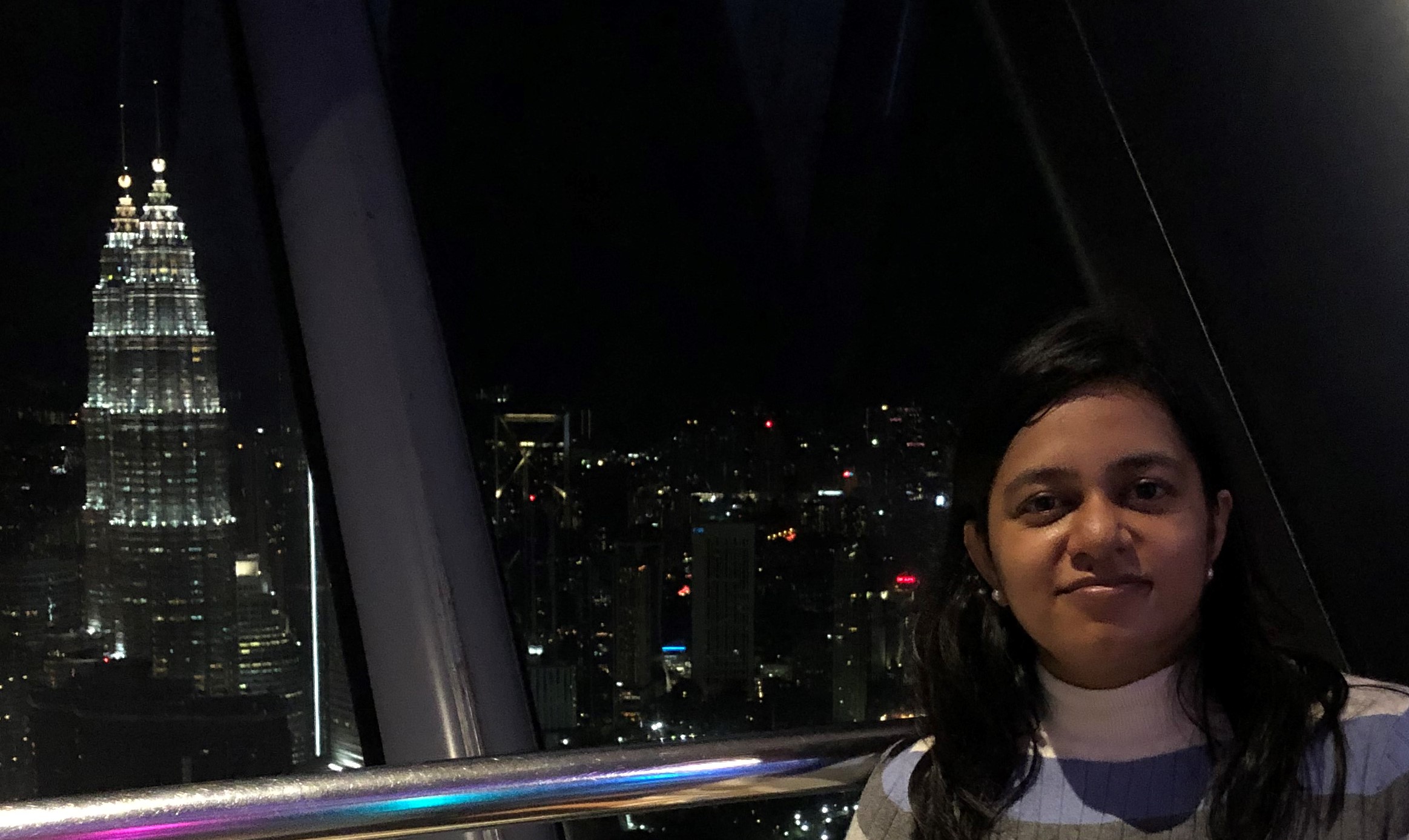
A normal lazy human with a love for procrastination, good food and edge-of-the seat TV shows, Nithya Rajagopal holds an MBA degree from IIT Madras and currently works for a philanthropic organisation. She is the author of Over A Samosa, a collection of short stories published by Readomania. She has also self-published an anthology, ThanThanaThom, Short stories from Tamil Nadu. Nithya was one of the top contestants of Write India Season 3 September (Nayantara Sehgal). Her articles have been published in Times Of India and Women’s Web. She is purely an accidental writer. No significant event led to this unfortunate vocation, except for the encouragement of her friends who felt she was better off writing than chattering nonstop.
Nithya, along with Deepti Menon and Anupama Jain, is the founder of Stories from the Peninsula, a platform to discuss literature from South India. She believes every girl has the right to dream, dare to explore the world and express herself. Nithya hopes to use IWI as a platform to encourage more people across the gender spectrum to claim their fair share of public space.
Having lived in Chennai for a good part of her life, Nithya loves the sea and surprisingly, the hot weather of the city. It allows her to spend more time with her books!
She blogs at The Ink Spear and can be reached on twitter at @TheInkSpear
 INCREDIBLE WOMEN OF INDIA