In 2016, British feminist advocate Caroline Criado Perez was on her morning jog when she noticed that there were no statues of women in Parliament Square, Westminster. She then launched a campaign demanding for them. This led the London Mayor to commission Gillian Wearing to create a statue of a suffragist, Millicent Fawcett. Fawcett became the first woman to be featured in a statue in the Parliament Square, and Wearing is the first female sculptor to have her work exhibited there.
Perez’s ‘Invisible Women: Data Bias in a world designed for Men’ explores reasons behind the ‘default male’ approach to designing the world and how sex- disaggregated data is either completely absent or not used in this. process.
The book consists of 6 broad parts covering aspects from daily life, planning, workplace, medicine to public life and disaster resilience with multiple chapters in each. Most of them have intriguing names like ‘Can Snow clearing be sexist’ to ‘A sea of dudes’!, encapsulating problems that lack data or participation of women, in decisions that affect them the most. Some of the issues highlighted, including unpaid household labour, higher responsibility on women in taking care of children & elderly, higher rates of domestic violence amongst women are well known to all of us. However, data, or rather the complete lack of taking women into consideration, for decisions and policies around safe housing, routes for public transport (which are used more by women), crash testing for cars using only the average male sized dummies were a revelation to me. It made me realise we don’t even seem to think of a gender angle in such non-inclusive policies.
An interesting example shows how an AI based recruitment software uses a Japanese manga site as an indicator for strong coding skills. While this may be a seemingly unbiased parameter, it fails to take into account the fact that participation in such sites is lower among women. This is owing to the fact that they are usually not safe spaces for them or because women ( including young girls) bear a larger burden of household chores and may simply not have enough free time to spend on these sites. Another story is about a pregnant Sheryl Sandberg, then the COO at Google, realising the need for a reserved parking space for pregnant women only after she suffered extreme difficulty in walking across the huge parking lot. These are very relatable examples even among the most privileged of us.
Such biases (in case of the software) or absence of simple policies due to a complete data gap (the reserved parking space was immediately created by Sergey Brin who just wasn’t aware of it until that point) may not be intentional, but Perez highlights once again that the absence of women in creating such recruitment processes or in their participation in decision making can be a deterrent for deserving candidates even when the intention may not be to directly exclude them.
While the book is all about data and numbers, I found it to be an easy read with the author including very human commentary around the data which can sometimes leave you exasperated and/ or angry. For example, ‘Part 4 – Going to the Doctor’ has shocking data on how medical research systematically under-represents women in clinical trials with reasons like complexity due to hormonal differences at different times of their menstrual cycles (male mice have known to show differences as well) or simply citing non-availability of women for drug trails (there is no evidence to suggest this, but it may be true, again due to women’s extra household responsibilities). For me, what sounded unbelievable was that females aren’t included even in animal studies on female-prevalent diseases. An excerpt reads “Women are 70% more likely to suffer depression than men, for instance, but animal studies on brain disorders are five times as likely to be done on male animals.” Choosing convenience cannot be the reason for regulatory bodies to not impose stricter guidelines around medical research which could kill or reduce the quality of life of a disproportionately higher number of women.
As an educated upper middle class woman in India, some of the data points sounded incredulous and hard to believe- for example, after the earthquake in Bhuj in 2001, houses were rebuilt without any kitchens. A similar example is cited for the post hurricane efforts in the US. I asked my male partner in frustration- do we really need women in the room to remember the need for kitchens? A more seemingly- inconsequential example is of women covering themselves in layers and sweaters in offices since the temperature set is usually as per male preference which is 2-3C cold than suitable for an average female. As I read these, I had to remind myself that this is not even about minority rights (which is a much bigger battle), we are talking about women who constitute 50% of the population and yet their voices are not taken into consideration in matters which affect them as much, if not more than men. Unless we start working hard to take the steps to make these changes, we leave no scope for an uneducated girl of color in the poorest countries to dream of a better and brighter future.
My only complaint perhaps from this book is that the author seems to indicate that this bias can be removed merely by having closing this gap in data and does not delve too deeply into any other significant cultural changes required, which according to me is not necessarily true. Even when data or a woman’s perspective is present, governments and leaders have chosen time and again to reduce them to minority issues or ignore them completely since politics runs with money which is mostly controlled by men today. Ultimately, the question remains- despite all the facts available and data gaps being filled eventually, what does it take to take them into consideration and build this world for both men and women?
I’d like to leave everyone with this video I received a few weeks back from my friend asking me to solve the riddle and not- so- surprisingly, I didn’t get it right. After reading this review, most readers may be able to solve it correctly, but do share it with your friends and family (including women) to understand the hidden biases we all carry and take a step to actively change it!
Written by Sowmya Vallabhaneni
About the author
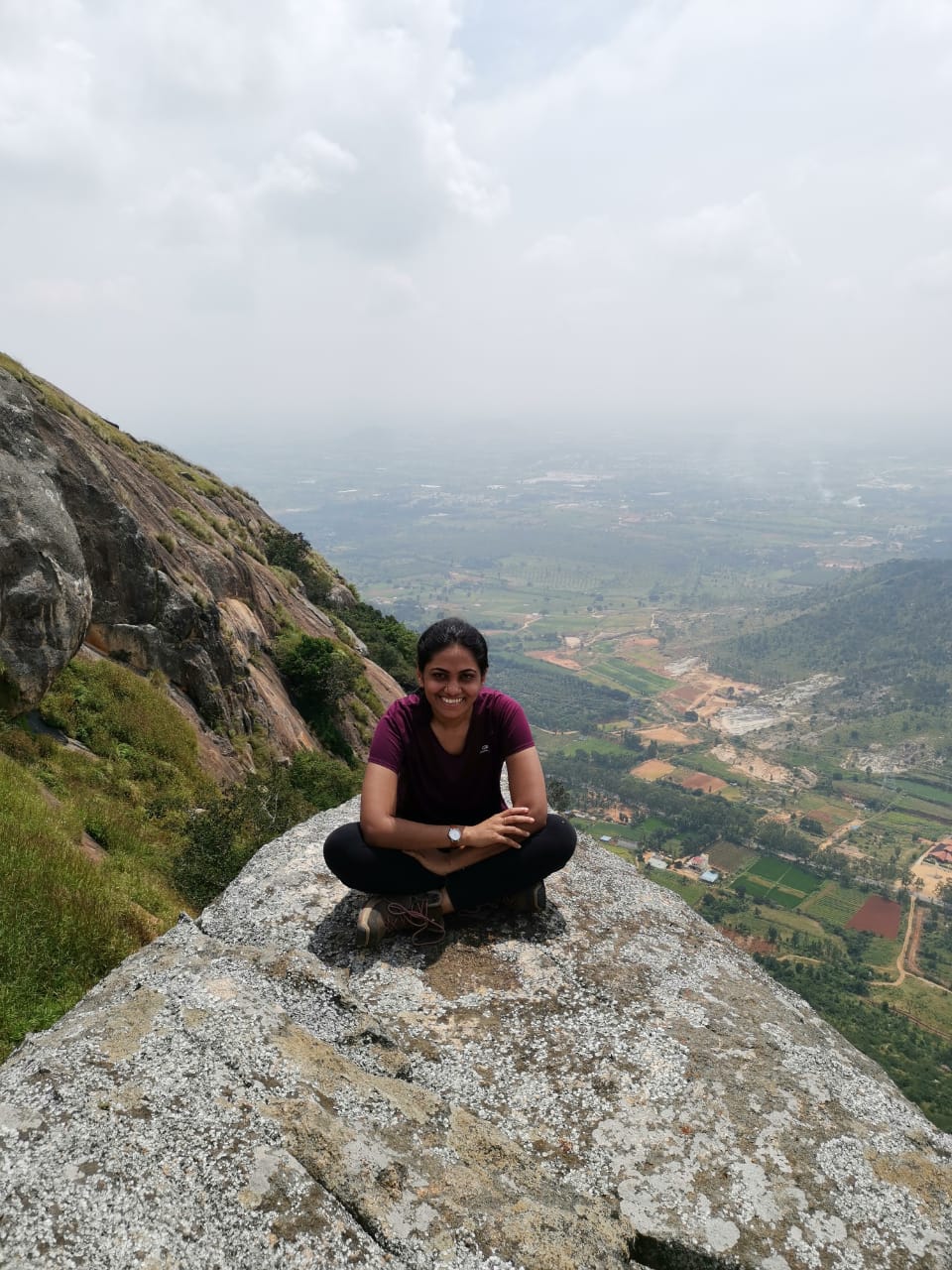
Although I graduated with a Dual Degree in Biotechnology from IIT Madras, I like to think of myself as a budding urbanist, having spent most of the last five years of my career working with state governments in various capacities, my current role being at a philanthropic organisation based out of Bengaluru.
When I am not busy trying to move the needle on some of the urban issues in our country, I love reading books, cooking and listening to good music. My friends call me an extrovert who loves to have long conversations, more recently those that challenge my own privilege and biases. The pandemic life has also made me become a regular at working out and try my hand at baking (to achieve that much needed balance in life!)
 INCREDIBLE WOMEN OF INDIA