Women today are visible in public life across the world, and hold positions as heads of state, parliamentarians, policymakers and administrators globally. This progressive trend is the culmination of many historical struggles and achievements, especially since the beginning of the 20th century.
The Indian Landscape
The Women’s Indian Association and The National Council for Women in India, an affiliate of the International Council for women, were first organisations to advocate for women’s influence on government policy. As the freedom struggle intensified, more women participated in the civil disobedience movement. The feminist movement and advocacy for women’s voting rights became inextricably linked with the nationalist movement
In 1946, 15 of the 299 members of the Constituent Assembly of India, which drafted the Indian Constitution, were women
Strong advocacy by women’s groups thus ensured that India enfranchised all of its adult women since the very first general election in 1951. It is interesting to note that this was just 30 years after the USA, and many years before Switzerland (1971) and Saudi Arabia (2015).
Today, however, there is an underrepresentation of women in public life. This gender disparity extends beyond the legislative roles and is also seen in the appointed positions in the executive. In both, the male predominance increases at higher positions, leadership roles and decision making positions
Women in Electoral Politics
Driven by an increase in the women voters, the sex ratio of voters (number of women voters to 1000 men voters) has consistently risen since Independence. Women vote differently and affect the election outcome. Political parties recognise and accept women voters as agents of change.
While this is encouraging, it is equally striking that the increasing percentages of women voters seen in general and civic body elections do not translate into a higher percentage of women campaigning, contesting or getting elected. This holds uniformly for civic bodies and gram panchayats where reservations have been introduced; and for general elections
In India, the offices of the President, prime minister and speaker have not been out of bounds for women. Leaders of opposition, political parties and state chief ministers have been influential and effective leaders. Yet, the disparity remains, even in parties or states led by women. Even women who have carved out strong identities and following have been relegated to the second rung or passed over for more powerful positions
India was ranked 148 out of 190 countries for women’s representation in parliament in 2019 by the Interparliamentary Union, an international organization of national parliaments.
The long, incomplete journey of the Women’s reservation bill, as it lies pending in the lower house, is, of course, a contributing factor. Equally important are the sociological factors. The executive summary of the High level committee for Status of women in India, submitted in 2015 mentions the 5 P’s ‐ patriarchy, property, power, propensity and physiology ‐ which are major barriers with increasing criminalisation of politics and violence against women, that play a distinct role in keeping women out of the political process and governance
Women in the executive
The first woman IAS officer was recruited in 1951. However, married women were not allowed to join the service and women in service were forced to resign if they got married. This discrimination ended in 1972. The Indian Police Service and Indian Forest Service followed in allowing women to join in 1972 and 1980. Despite this late start, the services have seen many distinguished women officers across all cadres.
Unlike politics, there is no reservation for women at intake level. Women friendly measures like maternity leave, child care leave have been introduced. There is pay parity, and rules do not discriminate against women for promotions and career advancement. Still, the percentage of women who aspire for and apply to civil services remains lower than men. Different socialisation of genders with women encouraged towards marriage and motherhood; and varied literacy, exposure and knowledge levels contribute to this.
Even after recruitment, the imbalance continues. Traditional expectations of balancing work and life, more responsibilities as caregivers at home and having to devote more time to child care, mean that fewer women opt for career advancement programs, training or even conferences. Many women report feeling sidelined for senior posts. The need for informal networking and self-promotion often hold back women from actualizing their potential.
An unempathetic work culture, perceived gender bias and mindset of colleagues of all genders are uniformly demotivating experiences. Closeted incidences of sexual harassment, gender violence, domestic abuse, safety and security issues make the challenges insurmountable for many.
This pattern of ‘the higher you go, the fewer women you see’ is similar to that seen in boardrooms and conference chambers globally. No woman has occupied posts like cabinet secretary, chairperson of organisations or premier investigating agencies.
Why is this important?
Women comprise 48 per cent of our population. Balanced gender representation in the public sphere, and sharing the power of decision making with men, has widespread implications
The legislature and the executive play the role of making and implementing all policies and laws, not just the ones targeted at women and children. Schemes in areas as diverse as labour laws, jail reforms, disability laws, education, employment , agriculture, taxation, and others, affect women’s choices and behaviour as much as they affect men. Viewing these through the lens of gender is crucial to maximising benefit for the society and ensuring effective service delivery and utilisation.
Thus, gender parity in governance and political participation is a prerequisite for the realization of gender equality per se. This empowerment of women and bridging of the gender gap is also recognized as being fundamental to achieving the 2030 Agenda for Sustainable Development and achieving the Sustainable Development Goals.
Need of the hour
India has had many wonder-women both in politics and public service since independence. These have inspired many women to explore similar avenues.
However, this should not detract from the need for continuous affirmative action to reduce the obvious persisting gender bias. It also needs to be remembered that role models are different from mentors, and that sustained and consistent steps are needed.
The steps that are in place, like reservations, need to implemented and monitored; and move beyond being mere tokenism. More interventions include mentoring programmes, ensuring uniform access to knowledge and information, bridging the gap in media exposure and leadership development.
Identification of specific hurdles, however small they may be, and their successful mitigation is a sure step to build confidence. Engaging with women, hearing and listening to their voice will help in making practical interventions. Flexible working hours, safe and accessible public transport, secure and enabling workspaces and prevention of violence at work, are steps towards encouraging women to join and remain in public life.
Mindset changes, stepping away from patriarchal conventions and systemic change may take longer, but women’s movements have proved that small beginnings can bring dramatic changes
Conclusion
Transforming equality on paper to equity in practice will translate into women scripting change for women.
It is now time to address this issue and change the landscape of Women in India’s Public life, towards a better tomorrow for everyone
About the author
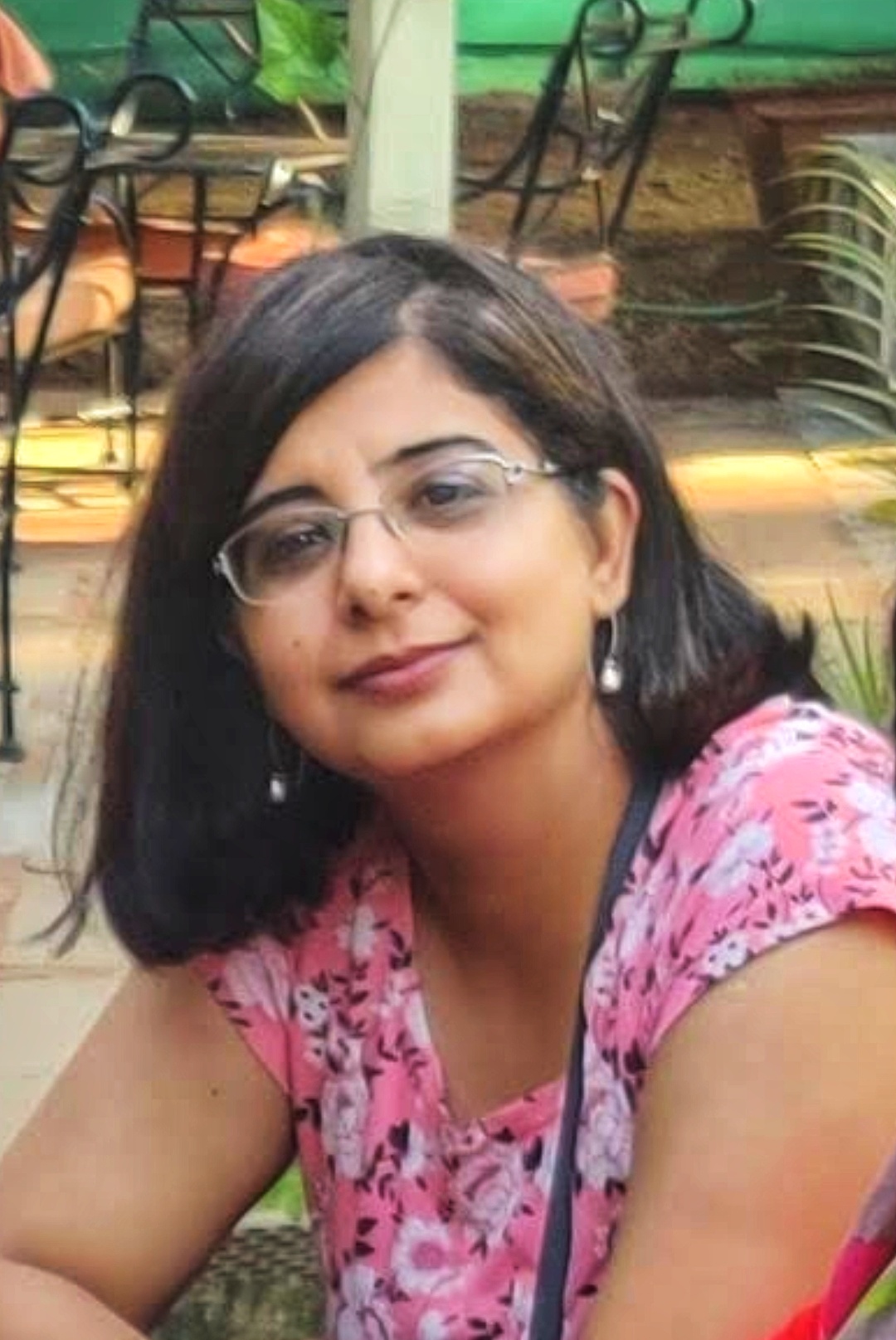
Dr Shalini Mullick is a doctor specializing in respiratory pathology. She is also a writer of fiction, nonfiction and poetry.
Shalini empathizes with the challenges and unique situations that women are often confronted with and weaves this understanding in her writing. She has won the monthly short story contest “Muse of the month “by Women’s Web on numerous occasions. She has been selected as a Juggernauts selects author, and was one the winners of the eShe short story contest in 2020. She has also contributed to other forums like Meraki: Soul talk, and Beyond the Box Chronicles. Prompt based micro fiction and flash fiction is a format that she finds engaging and her stories and poems are consistently featured on Penmancy, Artoonsinn, Mompreneur circle and others. She has been featured as blogger of the month on Momrpeneur circle; and on platforms like Sharingstories.com, and Qwerty thoughts. She has two contributed two stories to the anthology “Sharing Lipstick”. Shalini enjoys sharing her reflections on life as it happens around us and connecting with her readers. She is also a book reviewer and writes information and awareness pieces. Shalini has numerous scientific publications in various academic journals. She has also contributed chapters to text books. Medical humanities is an area that she has a keen interest in. Her poetry has been featured in journals and blogs which focus on this area. She is also copyeditor and on the Review board of the journal ‘Research and Humanities in Medical Education’. Belonging to the era before sorting hats, Shalini is relieved find that she doesn’t have to give up any one of the many hats she wears. She has decided to let the hats figure out how to share space, as she lets the parts sum up the whole. A late entrant to the parallel universe of writing, Shalini has discovered that writing helps to take her away from the noise, towards silence. A permanent excuse to avoid hitting the gym is an added bonus. Shalini has lived in Delhi and Bangalore before rooting herself in Gurgaon .
She can be found at www.shalinimullick.com; and reached at authorshalinimullick@gmail.com
 INCREDIBLE WOMEN OF INDIA