A potpourri of words, a mélange of concepts or a road map to feminism?
Diversity, Inclusivity, Intersectionality. Of late, these words seem to have become buzz words. Some people use them interchangeably; other times they have different connotations. In either case, they are used often in many discourses and discussions, including those related to the women’s rights movement.
What do the words mean? Equally important, what do these concepts stand for? How do we go beyond their dictionary definition and understand them? Are they limited to the workplace or organizations; or can they be applied to the quest for more fulfilling, equitable and better lives? Are they terms that will fade into rhetoric; or can they be a cornerstone for feminism?
Diversity:
Diversity represents the full spectrum of human demographic differences — race, religion, gender, sexual orientation, age, socio-economic status or physical disability. Its scope is further broadened by identities like national origin, political beliefs, education levels, lifestyle, geographic influences, family composition etc.
Novelist Chimamanda Adichie warns that if we hear only a single story about another person or country, we risk a critical misunderstanding. (Chimamanda Ngozi Adichie: The danger of a single story | TED Talk) Diversity is integral to removing these misunderstandings. It enables telling of multiple stories, helps to develop balanced perspectives and richer, more productive experiences. By bringing in new and creative thinking, diversity ensures the participation of people whose needs might otherwise be forgotten, therefore building a better global understanding.
However, merely accepting, allowing or even enabling diversity is not enough.
Inclusivity:
Bringing together the diversity and to harnesses it for the best possible outcome is essential. This is only possible when the cultural and environmental milieu makes people feel welcome and recognizes their inherent worth and dignity. Positive engagement by encouraging representation of different thoughts and beliefs ensures participation of all in decision making. When this inclusion happens, there is involvement and empowerment of all the diverse people or groups. It enables each person to be their authentic self, which is when they can contribute most to a situation, be it work, organizations or even family. It is this inclusivity that is crucial to a more equitable world; one in which everyone is seen, heard, represented and respected.
Authors Liz Fosslien and Mollie West Duffy have famously emphasized that “Diversity is having a seat at the table, inclusion is having a voice, and belonging is having that voice be heard.”
Clearly, then, diversity and inclusivity are important principles that are interconnected but not interchangeable. This is being increasingly recognized and many workplaces and organization have mandated these as their policies and best practices. Broadening the horizon from diversity to inclusivity requires us to understand how different social identities overlap and intersect with each other, making each person’s experience of the world unique. This is the premise of intersectionality.
Intersectionality:
So many social categorizations can be used to describe all of us. While these terms (for example male or female; white or of color; rich or poor) can be compartmentalized, the experiences they bring to us cannot (A male of color who is rich will experience the world differently from a rich white woman). Distinct factors, like race, ethnicity, religion, intersect with each other for an individual’s lived experience of the world. This impacts their daily lives as well as world views. It changes how they see the world around them, and how they are perceived by others. Some identities, or categorizations, can be affected by deep rooted prejudices, biases, or racisms. Oppressions intersect with each other, and with privileges. Intersectionality is where our multiple social identities converge, and individuals are recognized, as a whole.
Understanding these intersections, and their effects, is the fabric of true and genuine inclusivity.
For example, a Dalit woman bears oppression both because of her caste and her gender. Her experiences will be different from an upper caste disabled man, who in turn will see the world differently from a disabled Muslim woman. None of these experiences can be discounted. All need to be heard, understood, and validated. Just because the majority, or the others, haven’t had to deal with it does not mean it does not exist for the other.
Thus, intersectionality is the multidimensional analysis of our many social identities. It captures the complexity of the human experience more accurately. By understanding how overlapping categories of identity impact individuals and institutions, it will take into account any factors that can demarginalize people.
But what does all this got to do with feminism??
Feminism, of course, is about achieving gender equality and advancing the rights of women and girls. It is equally important to remember that social equity, and a world equal for everyone are integral to the feminist movement. Thus, feminism cannot be about one, or even a few types of women. As a woman in India, my concerns are different from a woman of color in America, or a Muslim woman in Iran, or a white woman in the United Kingdom.
For feminism to achieve equality for all women, it must bring together and represent experiences of all women. This is where the principles of diversity and inclusivity apply.
It is intersectionality that provides the framework for true inclusivity.
The ‘theory of intersectionality’ was coined by Kimberle’ Crenshaw in 1989, to describe how race, class, gender, and other individual characteristics “intersect” with one another and overlap. This was applied to the feminist movement.to describe the oppression faced by African-American women. Over time, all other aspects of oppressions and struggles were included under intersectionality. However, the word came into routine use much later. The word was included in The Oxford English Dictionary in 2015, and the Meriam Webster Dictionary in 2016.
Ending the gender-based discrimination is the goal of feminism. But, women are also subject to non-gender-based discrimination due to race, ethnicity, religion, disability. Even gender oppression is experienced differently by different women due to their other identities.
Intersectional feminism explores the nuances of how different forms of discrimination interplay and intersect with each. The experience of being discriminated against, like our identities, is more than the sum of its parts. Therefore, multiple oppressions are not cumulative. Rather, they are compounded, often in a complicated manner, leading to inequalities deeper than expected. There can be no sliding scale or point system to evaluate who is more oppressed. Each woman or groups experience is unique, cogent and legitimate. This realization is crucial to preventing accidental perpetuation of inequalities.
At an initial glance, intersectional feminism seems to highlight many separate burdens and issues that challenge women globally. However, on closer examination, it also indicates how these are interlinked. Hence, a fight fragmented due to different identities will not yield the success that a unified approach can. Until each woman is empowered, the goal of the feminist movement cannot be attained.
How can we practice intersectional feminism?
Intersectional feminism may appear to be a daunting, even overwhelming terminology, but, at its core, it is about looking out for each other, coming together and linking feminist movements to break the barriers of patriarchy. It is about the power of solidarity.
In feminism, intersectionality, means to hear, honor the other woman; to educate ourselves about their experiences; understand how these affect them. This is not possible without each one of us examining our own privilege. Being able to read this because of education and access to the internet is a privilege that you have. It does not take away from any disadvantages or discriminations that you might have suffered due to gender, race, nationality, or any other identity that you possess. (for example, struggle for equality at work, caste or religion related, being held to misogynistic standards at home and in family life, etc.). But it would make your experience different from an academically disadvantaged woman of color, an educated woman with limited access to technology; or even a woman from economically privileged families subjugated and deprived of education.
While this may appear to highlight the differences between you and others of your gender; intersectionality also serves as a reminder that it is presence of oppression that is common to these; and that these different types of oppression are interlinked. It is not possible to separate the experiences of these oppressions; and true emancipation is possible only when all forms of oppression affecting an individual or group are removed.
Understanding ourselves, and each other, will help to acknowledge and accept the many differences among us. Providing safe spaces, and enabling women, especially from marginalized communities to speak freely, shifting the center of feminism away from ourselves and to those differently oppressed, critical thinking and the willingness to challenge oppressive structures, even those that we were unaware of, will provide the intersectional ethic that is needed.
Many words come together as a blueprint for feminism:
Intersectionality is an effective framework to bridge the gap between diversity and inclusion; to achieve a socially equitable world, without any discrimination, which is the basic premise, and core tenet of feminism.
About the author
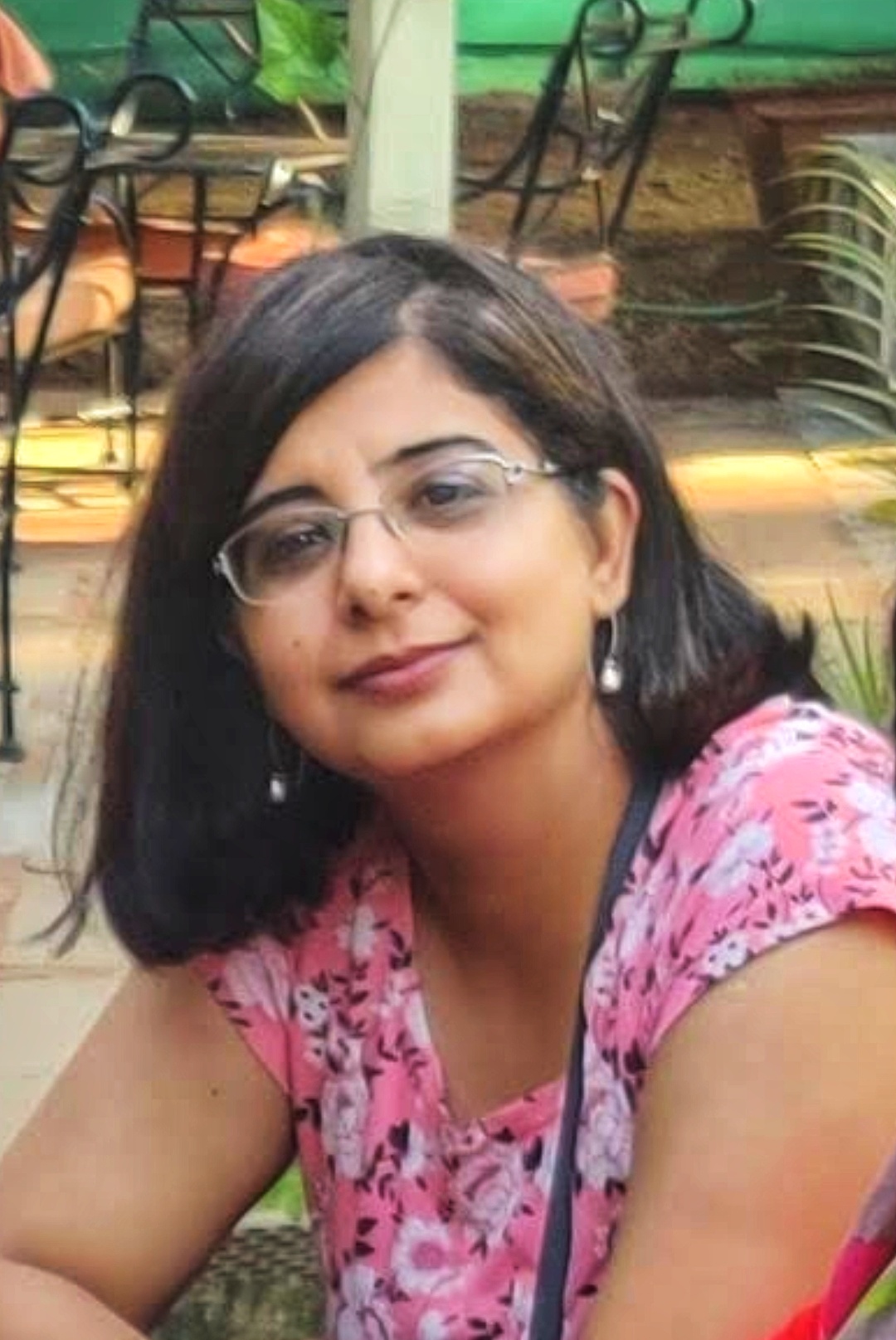
Dr Shalini Mullick is a doctor specializing in respiratory pathology. She is also a writer of fiction, nonfiction and poetry.
Shalini empathizes with the challenges and unique situations that women are often confronted with and weaves this understanding in her writing. She has won the monthly short story contest “Muse of the month “by Women’s Web on numerous occasions. She has been selected as a Juggernauts selects author, and was one the winners of the eShe short story contest in 2020. She has also contributed to other forums like Meraki: Soul talk, and Beyond the Box Chronicles. Prompt based micro fiction and flash fiction is a format that she finds engaging and her stories and poems are consistently featured on Penmancy, Artoonsinn, Mompreneur circle and others. She has been featured as blogger of the month on Momrpeneur circle; and on platforms like Sharingstories.com, and Qwerty thoughts. She has two contributed two stories to the anthology “Sharing Lipstick”. Shalini enjoys sharing her reflections on life as it happens around us and connecting with her readers. She is also a book reviewer and writes information and awareness pieces. Shalini has numerous scientific publications in various academic journals. She has also contributed chapters to text books. Medical humanities is an area that she has a keen interest in. Her poetry has been featured in journals and blogs which focus on this area. She is also copyeditor and on the Review board of the journal ‘Research and Humanities in Medical Education’. Belonging to the era before sorting hats, Shalini is relieved find that she doesn’t have to give up any one of the many hats she wears. She has decided to let the hats figure out how to share space, as she lets the parts sum up the whole. A late entrant to the parallel universe of writing, Shalini has discovered that writing helps to take her away from the noise, towards silence. A permanent excuse to avoid hitting the gym is an added bonus. Shalini has lived in Delhi and Bangalore before rooting herself in Gurgaon .
She can be found at www.shalinimullick.com; and reached at authorshalinimullick@gmail.com
 INCREDIBLE WOMEN OF INDIA