Mulling Over The Mundane
By Harshali Singh
Whist in the first lockdown, I was able to write to my heart’s content and churn out stories featured in eight anthologies. The second lockdown made the wheels of my creativity come to a screeching halt.
Inevitably I panicked and tried everything I had heard of to restart my brain and get the creativity to flow unobstructed… and failed. The surface-level fixes did nothing. Instead, they made me flail around trying to find a quick fix.
Our generation was brought on the principle that one is viable only until one can see a crossed out, to-do list at the end of the day. Following that logic, the number of days I was wasting started sitting heavy on my conscience. Every day I didn’t show a tangible output was a day wasted.
During this time, I happened to read an article that made me try something I had never thought to do, something that I considered unthinkable. This article told me to practice purposeful boredom to capture creativity. It sounded funny and unique, and since everything else had failed, I decided to give it a try.
Three deadly hours of the most boring task I could think of followed (the exercise we were asked to do). In my case, doing writing practice. Talk about being underwhelmed. Remember the brain-numbing cursive writing books we completed. Filling notebook upon notebook with chapters from textbooks. All this is in the name of improving our handwriting during the summer holidays. And the teacher barely glanced at the painstakingly carved alphabets before signing on the last page in a hurry. Hours of useless hard work laid to waste.
After diligently cussing out the article writer and myself for three hours, I gave up. But that day, I felt the first stirrings of an idea. The dense brain fog of the past couple of weeks was dissipating. Lo and behold, I was happily back at the laptop typing furiously.
A sigh of relief later, the overthinker in me began researching how a boring task had helped in retorting an essentially numb part of my brain?
I regularly practice purposeful boredom because it makes sense to wipe clean all I have absorbed to start from a new page. I could visualise a future for myself as, apparently, I was using only a fraction of my mental capacity while doing all that mindless copying. Hence, I was subconsciously doing future goal setting. I later found out that this was called autobiographical planning.
Undoubtedly technology is designed to capture and hold our attention, to stave off boredom. This simply means my brain had gone numb due to the constant exposure to stimuli and entertainment. So, this exercise of distancing myself from any triggers had me turning off my brain to restart it… quite like rebooting my mobile phone.
As I looked around, I saw many people suffering from this syndrome of feeling stuck or in a rut. And hence the question that needed to be answered.
What is boredom?
Boredom, I found, is the less charming and uncharismatic cousin of melancholy that brings forth the fragrance of wisdom, sensitivity and beauty. Ennui would be its chic, somewhat pretentious sister who lives overseas, and one can’t really get treated for boredom. I don’t see anyone nodding their head and empathising with me were I to say ‘I’m bored’ as they do when I say ‘I’m stressed.’
They immediately relate to the word- stress probably because it reflects gainful employment, success, and need. While the word bored is attached to a lack of passion and purpose, an absence of accomplishment and initiative. A dearth of ‘inner resource’ to take the words from John Berryman’s poem, ‘Dream Song 14.’
To me, the word boredom spells memories of lazy summer afternoons. I would lie staring at the ancient and exhausted fan circling overhead in a state of suspended animation. It felt like being caught in the tip-of-the-tongue syndrome, a sensation that something is missing, though one can’t quite say what.
It is also an indicator that I may not be in the best situation at the moment. At a party with acquaintances, friends and family, I find myself wishing things were more lively, missing that one friend who gets me or feeling helmed in when I can’t share my views as that would be considered impolite. Sometimes I fear that if someone would put a filter that reads my topmost emotion- BORED would flash in dancing neon colours.
With thriving consumerism came a plethora of amusements. Leisure became a time that needed to be filled with never-heard-before-activities. These comparison creating activities had very little meaning if one looked at the big picture. Expectations have grown to dangerously large proportions that life has to be exciting and adventurous if not meaningful. Our social and real lives have become cleaved in a way that defies logic.
Surprisingly, theorists classified boredom into three types: the mundane tedium of waiting at the airport or for the bus. A profound malaise that sounds like the human condition itself. An ineffable deficit of some unnameable something that sounds very familiar to us. Like the usualness of our routines that sometimes feel like a scratchy blanket or hearing the same dinner conversation for the umpteen time. Predictably then, investigations reveal that quarantined people listed boredom as the second most damaging aspect of being locked in. Lack of freedom being the first and lack of fresh air the third.
Our family dog snatched my daughter’s pen from her desk on a hectic day and walked off. He turned at the door to see if anyone had noticed his misdemeanour. Was it his way of saying, ‘Play with me, I’m bored?’ I can’t deny that I can spot that expression on his face when we humans are all caught up.
I find this occasional mundane boredom different from the existential boredom that constitutes isolation and mental weariness that many people undoubtedly suffered from during the Pandemic. They find themselves unable to break out of this ouroboros like condition even now.
Tolstoy’s words that boredom is “a desire for desires” is another interesting way to look at a concept that we are told to fight against. Since I have become mindful of experiencing boredom, a new portal has opened up when I read. Most authors write about their characters facing some kind of boredom pursuant to which they create chaos to satisfactorily resolve it later. Think of three of your favourite books and see if you can locate this concept in them.
I like letting my mind wander, sitting alone and allowing it to go where it will. I enjoy grumbling, groaning, sighing on the inside while I face this world with a smile. Complaining and being tetchy has restored my sense of humour in challenging situations more times than I care to count.
I guess it boils down to how one views life. You can use boredom to reset yourself creatively, become more altruistic. Or you can let this quarantine fatigue lead to adverse and disruptive behaviour. You can use it as an indicator to tell you when the situation you are in is not the best, or you can push yourself to move or even change the goal post.
The choice is in your hands, after all.
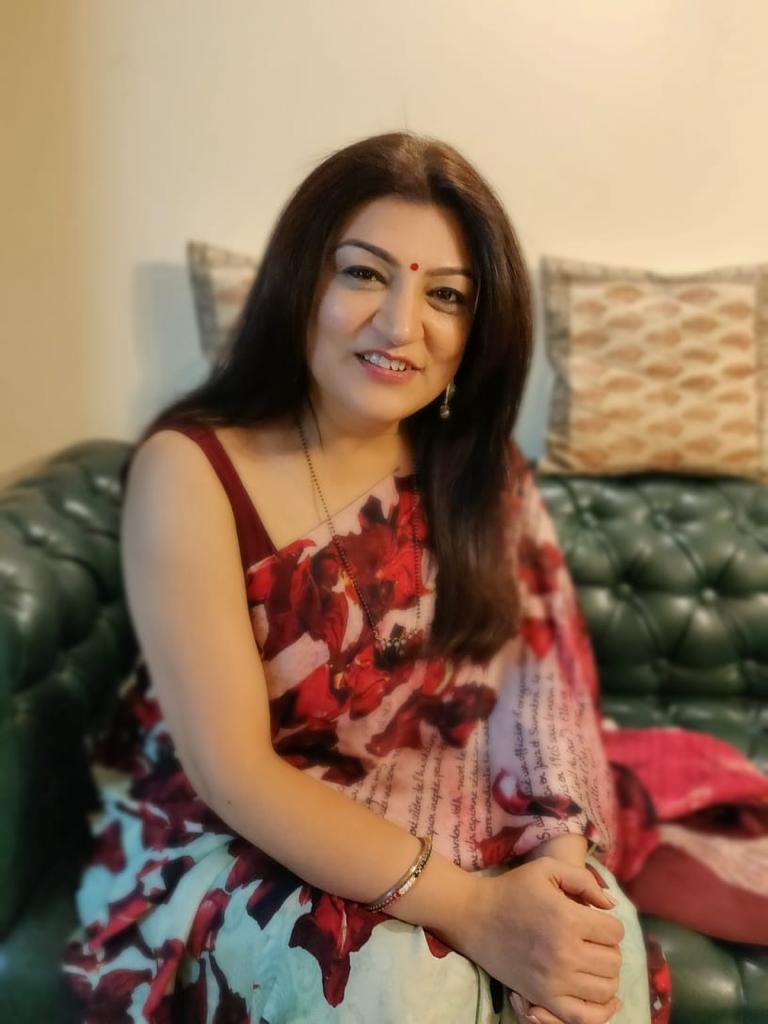
Dr Harshali Singh is a Member judge at the Consumer Forum, an Author, a Poet, an academician, an Occupational Therapist and a Painter. She has written in several literary genres ranging from poetry, fiction, anthologies and magazines.
Her Novels ‘A Window to her Dreams’, and ‘The Anatomy of Choice’ form part of a nine-book ‘Haveli Series’.
 INCREDIBLE WOMEN OF INDIA